Duties are often triggered when imported goods clear customs. The timing of those payments can have a significant impact on cash flow, especially when inventory sits in a warehouse for weeks before being sold.
For companies moving freight across the U.S.-Mexico border, choosing the right warehouse is an important decision. It can affect upfront costs, shipping speed, security, and compliance.
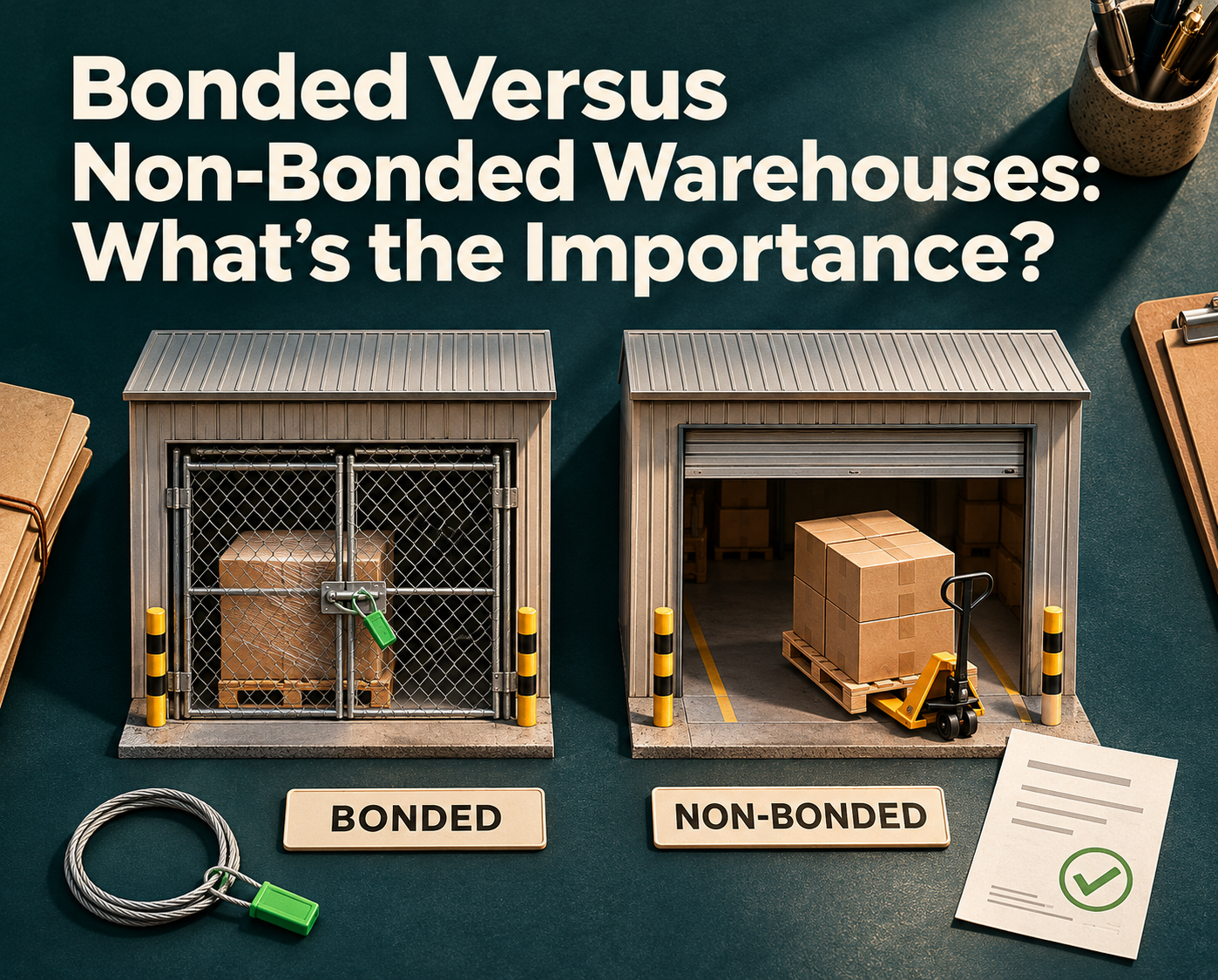
Let’s take a look at the differences between bonded vs non bonded warehouse options and when each makes the most sense.
What Is a Bonded Warehouse?
A bonded warehouse is a storage facility approved by U.S. Customs and Border Protection (CBP). It allows imported goods to be stored before applicable duties and taxes are paid. These warehouses operate under the regulations outlined in 19 CFR Part 19.
Warehouse operators, with the exception of government-run facilities, must obtain a custodial bond with CBP. Goods can generally remain in a bonded warehouse for up to five years, allowing importers to defer payment until the goods are withdrawn for sale or use in the United States.
This arrangement can be especially useful for businesses that need to manage cash flow carefully. Rather than paying duties immediately when goods enter the country, companies can hold inventory in a bonded warehouse and pay applicable duties when the goods are released.
Types of Bonded Warehouses
CBP recognizes 11 classes of bonded warehouses, each with its own permitted uses. Some of the most relevant examples include:
- Class 2: Private warehouses, which store goods belonging to the warehouse owner
- Class 3: Public warehouses, which can hold goods for multiple importers
- Class 6: Warehouses where goods can be manufactured in bond
- Class 8: Warehouses that permit activities such as cleaning, sorting, and repacking
- Class 9: Warehouses that provide duty-free storage at airports and border crossings
The differences between these classes can be important, depending on the type of goods a company handles and what it needs to do with them. Businesses should understand the specific requirements that apply to their inventory before choosing a bonded warehouse.
What Is a Non-Bonded Warehouse?
A non-bonded warehouse is a standard storage facility for goods that have already cleared customs. Applicable duties and taxes have been paid, so the goods can move through the domestic supply chain without the additional customs procedures associated with bonded storage.
Non-bonded warehouses are the default option for many domestic shipping operations because they generally involve less paperwork and lower administrative costs. However, if a bonded warehouse offers a significant operational or financial advantage, a shipper may find it worthwhile to pay the additional fees.
What Are the Benefits of Using a Bonded Warehouse?
One of the main benefits of a bonded warehouse is improved cash flow. Because duties do not have to be paid immediately, companies can retain that capital until their goods are ready to be sold or otherwise released. This can be particularly valuable when inventory needs to be stored for an extended period.
Bonded warehousing can also allow businesses to manage duty payments in smaller quantities as goods are withdrawn, rather than paying duties on an entire shipment upfront. The precise benefits depend on the goods involved and applicable customs requirements.
No U.S. duties on re-exported goods
Goods stored in a bonded warehouse and subsequently re-exported may avoid U.S. import duties that would otherwise apply if the goods were entered into domestic commerce. This can be useful for companies distributing products through the United States to Mexico, Canada, or other markets in Latin America.
For businesses using the U.S. as a distribution point, bonded storage can offer a way to hold inventory without necessarily incurring the same duty costs as goods destined for domestic use. For companies managing cross-border freight, bonded storage can also help reduce detention fees on U.S.-Mexico freight.
Flexibility on timing
Bonded warehouses can generally hold goods for up to five years. This gives companies flexibility when managing inventory, particularly when they do not know exactly when a shipment will be sold or released.
Instead of paying duties immediately, businesses can wait until the goods are needed. This can help companies manage fluctuations in demand, avoid tying up capital unnecessarily, and coordinate the movement of goods across multiple markets.
Permitted handling options
Depending on the warehouse classification and applicable rules, bonded facilities may allow certain activities, including cleaning, sorting, repacking, and relabeling. These options can help businesses prepare inventory for distribution while it remains under customs supervision.
The permitted activities vary by warehouse class. Companies should confirm that a facility is authorized to perform the work they need rather than assuming every bonded warehouse allows the same operations.
Drawbacks and Limitations
Bonded warehouses also come with additional administrative requirements and oversight. They may charge higher storage and handling fees, and inventory typically needs to be recorded and managed in greater detail to meet customs requirements.
There are also limits on the types of goods that can be stored and the activities that can be performed. Goods that remain in a bonded warehouse beyond the permitted five-year period may be treated as abandoned, subject to applicable procedures.
Finally, mistakes in customs filings or inventory records can lead to significant fees and compliance problems. For some businesses, these extra costs and responsibilities can outweigh the financial benefits of deferring duties. Learn more about common customs mistakes when shipping between the U.S. and Mexico.
When Does a Non-Bonded Warehouse Make More Sense?
Non-bonded warehouses are a typical choice for shippers who plan to move items to customers within days. In this case, deferring duties may not provide much advantage.
The added administrative load required by a bonded warehouse can also be an obstacle if the company does not need extended storage or customs-supervised handling.
These facilities are optimal for shippers that do not need the duty-deferral, re-export, or compliance benefits associated with bonding.
Cross-Border Warehousing Considerations
For companies operating between the United States and Mexico, the warehouse decision should account for more than storage cost. Cross border warehousing may involve staging freight before a border crossing, absorbing customs delays, consolidating shipments, or holding inventory close to production or distribution points.
At border hubs such as Laredo port congestion, El Paso, and Otay Mesa, companies may use bonded storage, in-bond movement, or standard domestic warehousing depending on the product, import status, destination, and timing requirements.
The right choice depends on whether the priority is duty deferral, speed to market, inventory flexibility, or reducing the risk of a border delay. Real-time freight tracking can help teams monitor inventory movement and identify exceptions before they become costly delays.
Conclusion
Small operational choices can have a major impact in cross-border logistics. While the benefits of bonded vs non bonded warehouse options become clearer with analysis, companies should consider every factor relevant to their operation.
At Vector Trade Office, we serve as an embedded leadership layer, helping manage operations for improved efficiency and operational ease. A bilingual logistics team can support communication across U.S. and Mexican partners, while a clear understanding of 4PL vs. 3PL logistics helps clarify who owns the outcome when exceptions occur.
Book a 15-minute discovery call to find out how we can reduce costs and streamline results across your cross-border supply chain.