
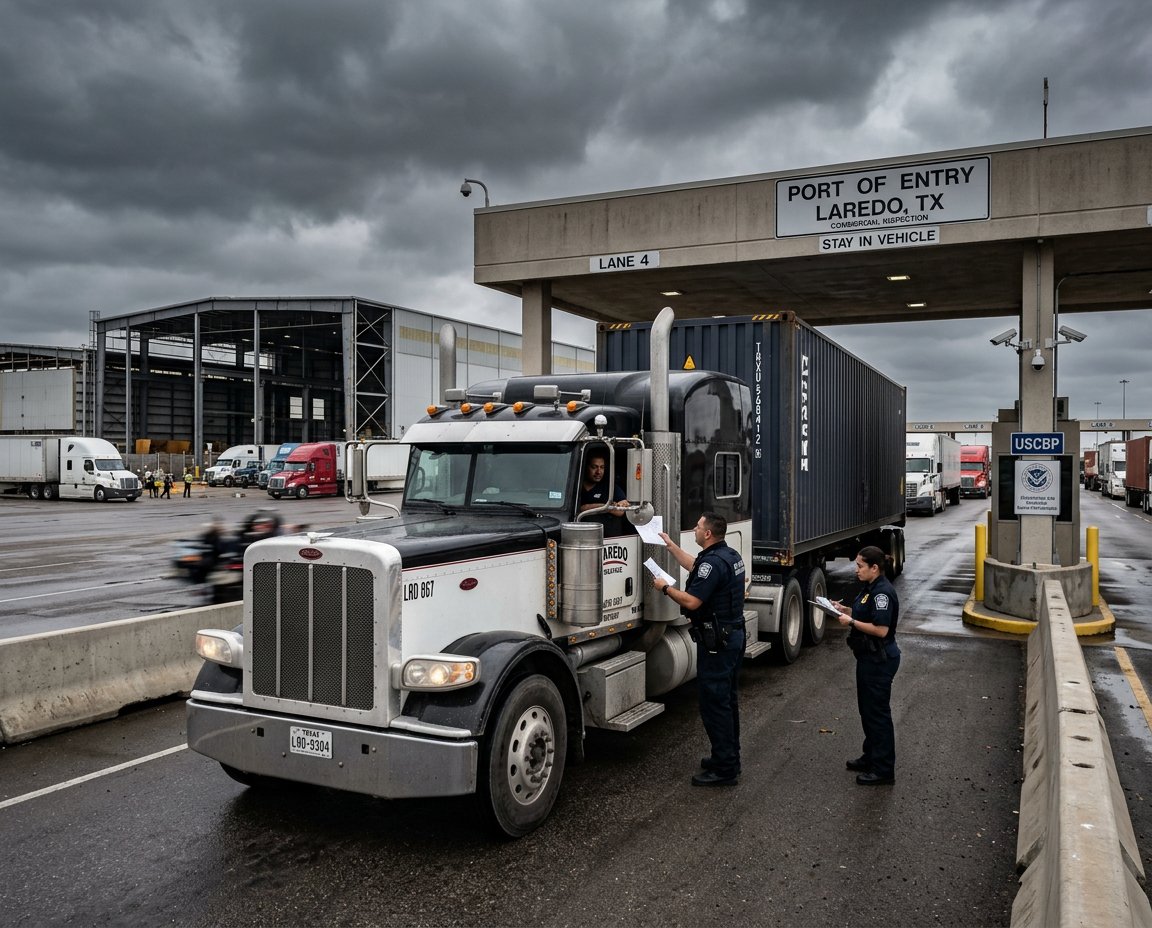
Laredo port congestion is a common concern for manufacturers trying to efficiently and cost-effectively move materials. Trucks can back up for miles near the approach to the World Trade Bridge on a Monday morning rush. When they do, it’s not just a headache, but a genuine expense.
Because Laredo is the busiest inland port on the U.S.-Mexico border, one that handles the most truck crossings, as measured by value, it requires special concern and consideration. Laredo port congestion is both inevitable and manageable with the right understanding.
In this article, we take a look at everything you need to know about Laredo port congestion, why Laredo specifically gets so congested, and how manufacturers can mitigate its effects.
Why Laredo Specifically Gets So Congested
Laredo’s role in U.S.-Mexico trade volume is undeniable. The port handles more truck freight by value than any other of its kind, ahead even of Otay Mesa and El Paso. Because it is so close to the Mexican industrial corridor in the form of Nuevo Laredo, Monterrey, and Saltillo, it’s well positioned.
There are also localized bottlenecks that exacerbate the situation. The World Trade Bridge in particular handles the vast majority of truck traffic and is notorious for backups.
The Columbia Solidarity Bridge, meanwhile, lacks adequate infrastructure to supply the relief capacity that it was built to facilitate. This means that almost all traffic in one of the busiest ports in North America is crossing over a single bridge.
There is an alternative option in the Columbia Solidarity Bridge, but in many cases, it’s underused.
CBP Staffing and Inspection Booth Limits
The U.S. Customs and Border Protection staff mix inspection booths and secondary exam bays. The problem is that when volume spikes, capacity to meet it usually does not.
There is a reported problem with CBP officer staffing shortages and little by way of relief in terms of federal budget allotments. This is a fluctuating problem that can change both seasonally and year to year, but it does have an impact on freight transit.
Other factors like random or targeted secondary exams further the potential for unpredictable delay, regardless of how busy the location itself is.
Seasonal and Weekly Traffic Spikes
To avoid Laredo traffic spikes, freight concerns, you must first understand when bottlenecks are at their worst.
Weekly patterns tend to be fairly predictable, with Mondays and the days directly after a U.S. or Mexican holiday seeing the heaviest amount of backlog. This stems primarily from the fact that freight isn’t moving over weekend periods.
There are also seasonal patterns. For example, during the fall through the spring, there is a heavy volume of produce competing for lane space with manufacturing, which can worsen the congestion.
Also worth noting is the pre-holiday retail season, which takes place between August through November, during which time manufacturers are pushing consumer good volume north.
Infrastructure and Local Road Capacity
Finally, the infrastructure itself just doesn’t support the volume of trucks that comes through.
Unfortunately, this problem is not entirely answerable. Loop 20, I-35, and other roads simply weren’t built for the volume that they’re currently receiving, which means that congestion can start miles before they reach the customs booth.
TxDOT, the Texas Department of Transportation, is working on building infrastructure to alleviate this problem, but that construction is currently exacerbating it. Ironic, isn’t it?
How Congestion at Laredo Actually Affects Manufacturers
The problem from a manufacturing angle is that detention fees, driver hours-of-service violations, and missed delivery windows come at a high cost.
There’s also an indirect cost associated with production line slowdowns for manufacturers running just-in-time inventory models. In this case, a delayed inbound part shipment can literally halt production lines.
The downstream effects continue: missed customer delivery commitments, expedited freight costs to make up for lost time, strained relationships.
Practical Strategies to Mitigate Port Congestion in Laredo
To mitigate port congestion in Laredo problems efficiently, there are several strategies that you can use.
First, consider shifting crossing times away from the peak windows. As mentioned before, Monday is the worst time, but if you can schedule early before 6 a.m. or midweek rather than Monday and Friday, you’ll have a lighter volume of traffic.
Many shippers can see significant improvements simply by moving a crossing by several hours.
Use the Columbia Solidarity Bridge as Relief Capacity
As mentioned earlier, the Columbia Solidarity Bridge is significantly less congested than other options. There is extra driving distance required, and carrier drayage providers need to
Enroll in CTPAT and FAST for Expedited Lanes
CTPAT, or Customs Trade Partnership Against Terrorism, and FAST, Free and Secure Trade, enrolled carriers and shippers are able to access dedicated lanes. The inspection rate is lighter and the traffic tends to flow more freely.
This does require an upfront security profile, along with occasional audits. But it’s a worthwhile front-end investment for manufacturers that have steady, high volume at Laredo.
Build a Schedule Buffer Into Production and Delivery
Adding a buffer window of just four to eight hours into inbound parts scheduling can save significant frustration down the line.
Treating border crossing as a variable time segment is a more realistic scheduling strategy that can prevent slow days from creating a downstream effect.
Pre-File Customs Paperwork
Submitting Pedimento and U.S. entry paperwork to customs ahead of arrival is a simple way to streamline clearance. The documents you’ll need include your commercial invoice, packing list, USMCA certificate of origin, and bill of lading.
Work With a Drayage Partner That Has Local Yard Capacity
Drayage providers who have staging yards can hold and stage loads strategically. This could potentially allow for smaller, staggered batch crossings that lighten windows.
This does require an element of local knowledge in terms of which lanes are running light on a given day. A Laredo-based partner may have this information on hand.
Monitor Real-Time Border Wait Data
The CBP does publish border wait time data, which is information that can be checked prior to dispatch.
Building a daily check of this information into dispatch routines can significantly improve operations.
Key Takeaways
Laredo is almost definitionally difficult. That doesn’t mean handling traffic, high rates of volume, and untimely fluctuations is unmanageable. It just means that a little extra consideration on your part may be required for success.
By systemizing these approaches, you’ll run freight with fewer frustrations and more flexibility.
Vector Trade Office is a 4PL firm with a leadership team that has decades of experience in cross-border logistics. Click here to learn more.