Even a single weak carrier partner can result in debilitating cargo holds, incidents of theft, compliance penalties, and missed delivery windows.
Simply put, the stakes are too high to accept inconsistency and error, particularly in the highly volatile world of cross-border freight.
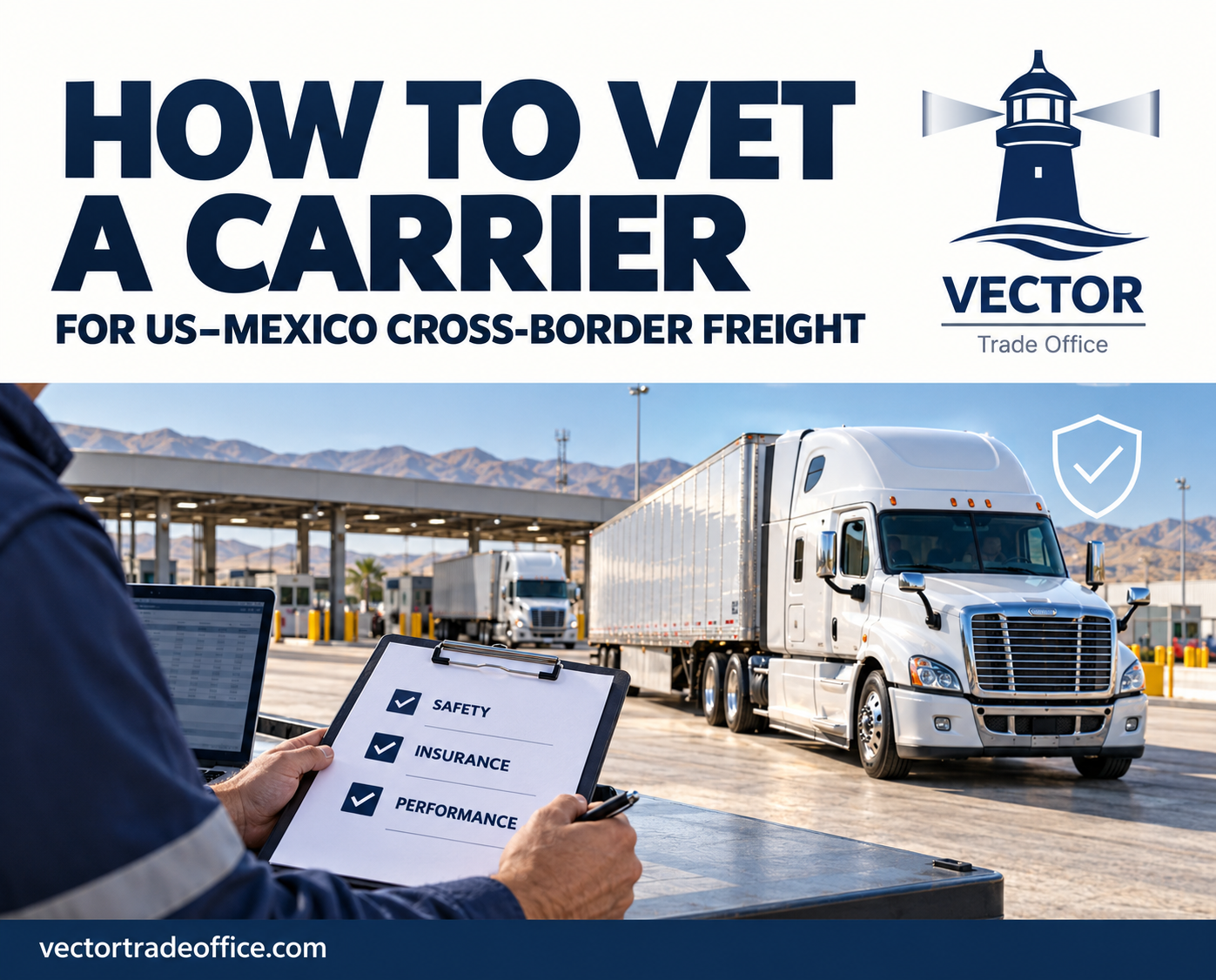
It’s important to adequately vet your carrier partners. That way, you can ensure that the necessary compliance requirements are being met across both regulatory systems. A good carrier vetting checklist will help mitigate risk and simplify your partnership decisions. In this article, we walk through what that checklist should include and how to turn it into a repeatable process.
Why Carrier Vetting Matters More on the U.S.-Mexico Corridor
Moving freight across the border involves considerably more complications and nuance than domestic shipping.
Every handoff point is a potential source of added costs or increased delay risks. Cross-border freight also brings added compliance exposure and additional threats to cargo safety. That’s why it’s important to ensure that your carrier vetting process reflects the high need for quality and control.
The Cross-Border Carrier Vetting Checklist
Operating Authority on Both Sides of the Border
An active USDOT number and FMCSA operating authority are required. Mexican carriers that operate beyond the U.S. border commercial zone need long-haul operating authority from FMCSA.
SICT federal operating permits will also be required, as well as a CAAT code, which Mexican customs requires for carriers moving cross-border freight.
Insurance Coverage
There are also additional insurance requirements. U.S. liability and cargo coverage limits will apply.
However, you also need Mexican liability insurance, because U.S. policies won’t typically cover operations in Mexico. It’s also necessary that you confirm certificates of insurance with the insurer, not just the carrier.
Safety and Compliance Records
Review the carrier’s FMCSA safety rating and CSA scores to gauge its compliance record.
Driver qualifications and credentials should also be verified, including a FAST card and B1 visa where applicable.
Security Certifications and Practices
Naturally, security measures are always important and can take on extra seriousness during portions of transit in Mexico.
CTPAT certification in the U.S. and OEA certification in Mexico can go a long way towards keeping shipments safe. The same is true of GPS tracking and theft prevention practices.
Documentation Accuracy
Carta Porte compliance is a requirement for freight moving in Mexico. It’s also important to ensure that carriers have in-bond capability where needed.
Verify as well how they will coordinate with your customs brokers to make arrangements during transit.
Equipment and Capacity
Naturally, equipment and capacity remain important in cross-border transit. It’s good to understand not just how much equipment a carrier has, but also the age and condition of the fleet where possible.
You want to find a partner who can match your capacity on the required lanes and even scale as your volume increases.
Financial Stability and References
It’s easy to overlook the importance of partnering with a financially stable carrier. Ideally, you’ll find a business with a proven track record and the ability to substantiate that it can manage your needs.
In other words, do they have references from shippers with similar freight? How long have they been in business? What’s their ownership history?
Red flags include recently granted authority, frequent name changes, and suspiciously low rates.
Turning Vetting Into a Carrier Procurement Process
Remember that vetting is a continuous part of carrier procurement rather than a one-time task. You should standardize your checklist across every carrier and lane to ensure consistent results.
It’s also important to define performance expectations before freight moves. Then, develop ways to audit those metrics once operations begin.
Common Carrier Vetting Mistakes to Avoid
One of the most common and potentially consequential vetting mistakes is choosing a partner based exclusively on the rate. Getting a good price is important. However, it’s equally important to understand that flat quotes alone do not accurately reflect the costs you can expect to pay.
A partner that charges low rates may still make frequent mistakes, create unnecessary delays, and create situations where your business faces fines or penalties. That partner will be considerably more expensive than a well-chosen partner that charges more upfront but delivers good results.
It’s also important to fully vet all parties responsible for moving your freight. Don’t investigate the Mexican carrier without also doing your due diligence on the transfer carrier that moves your trailer across the border and the U.S. carrier that takes it from there.
Finally, be sure to verify all claims independently. Providers will likely be able to hand you references and other documents pertaining to their track record. If those can’t be independently verified, they aren’t worth very much.
Remember that even once a carrier has passed your verification process, your responsibility for due diligence doesn’t end. Regularly review your partners to ensure that they are meeting your expectations and continuing to deliver the best results for your money.
That can mean re-verifying their authority, their insurance coverage, and their certifications. It’s best to schedule each review in advance to make sure it happens on time and follows a standardized format.
You should also have metrics at your disposal to easily audit the information you’re looking for. For example, track on-time performance, claims, and border delays for each carrier. This helps you stop slippage before it develops into something unsustainable.
Quarterly performance reviews will help ensure that everyone is doing what they’re supposed to do. Logistics carrier management can be considerably easier than many people assume, but it does require systems.
Conclusion
Vetting is one of the highest-leverage steps in choosing freight carrier partners. It’s only through this verification and evaluation process that you can standardize results and systematically avoid unnecessary fines or delays.
The problem is that many businesses lack the resources, capacity, or understanding to manage their carrier partners. Vector Trade Office exists to fill that gap as a 4PL partner. We act as an extension of your management team. Our job is to coordinate carriers, consolidate information, and take accountability for outcomes.
If you’re interested in learning more, book a short discovery call. We’ll examine your situation, identify points of vulnerability, and recommend a plan of action.